
At NASA 1958-1964Who Convinced NASA?
Rogallo had failed to convince NACA at Langley to study the flexible wing. In December 1958, NASA’s Langley Committee on General Aerodynamics decided to hear Rogallo describe how it might be used for a ground landing. The group responded warmly, and work on the concept moved from Rogallo’s home to laboratories at Langley.
On 30 March, 1959, the Space Task Group heard what Rogallo had to say, and its director suggested that some study on flexible wings be included in the Mercury program.
While Rogallo and his co-workers at Langley pushed ahead with their research, the Space Task Group forgot the flexible wing until early 1961. It was working on Apollo, and they remembered the design that was now called the paraglider—a rigid-framed membrane wing—could be used to land the capsule on the ground rather than on water. Some of the Space Task Group engineers met informally with Rogallo and his colleagues in February, March, and April to explore the use of a paraglider. The Space Task Group team was less than enthusiastic. It advised gathering at least six months of data before awarding any paraglider development contracts.
At the same time, however, McDonnell Aircraft Corporation engineers were looking at a paraglider for the modified Mercury Program, and Marshall Space Flight Center had already let two contracts to study the paraglider as a booster recovery system. In May 1961, the director of Project Mercury decided to contract three companies to design a paraglider landing system and define potential problem areas: Goodyear Aircraft Corporation, Akron, Ohio; Ryan Aeronautical Company, San Diego, California; and North American Aviation Space & Information Systems Division, Downey, California. The Paraglider Development Program was born.
According to Francis Rogallo
In Parawing for Astronautics, a 1963 presentation to the Specialist Meeting on Space Rendez-Vous, Rescue and Recovery. (rre-06)
In June 1954, a proposal to include parawing research in NACA budget was made. A paper was proposed. Rejection arrived, which included this statement: “Although the paper is out of the ordinary and looks like it might be fine to hear, it just not fits in our program.” We continued our private research. Many were amused, but none was willing to support the concept.
The launching of Sputnik I seemed to shock the aeronautical research community. It began to consider seriously many unconventional ideas. The parawing was one.
In December 1958, a presentation was made to the Langley Committee on General Aerodynamics, and gradually people in other divisions volunteered to investigate parawings. In August 1959, Dr. von Braun invited me to give a presentation to some of its people at Huntsville.
In April 1960, a paper was given at the SAE National Aeronautic Meeting. Also in the Spring, parawings briefings were given at Ryan and North American at their request. Before the end of 1960, Ryan had begun building the powered Flex-Wing at their own expenses.
In January 1961, I presented a parawing talk at the IAS Meeting in New York, and in March I repeated it in local chapters in Lancaster and San Diego, California.
In Profile
An interview in Glider Rider– 1976.
During the ten years between 1948 and 1958, the time we invented and patented it until the NASA was formed, the NACA people knew about it and began some research along this line. It proved successful and more people got interested.
In And The World Could Fly
Interviews by S. Malbos – 1994.
In 1959, urged by Werner Von Braun, NASA decided that flexible wings were of interest for possible recovery of space flight vehicles.
In Rogallo
Charlie Jöst's documentary – DHV – 1990.
“Rogallo presented his decade-old concept, and with the support of German NASA manager Wernher von Braun, who saw potential in flexible wings for returning boosters to land, NASA initiated a costly research program.”
In The Flyingest Flying
Josh Criss' documentary – Precision Video – 2003.
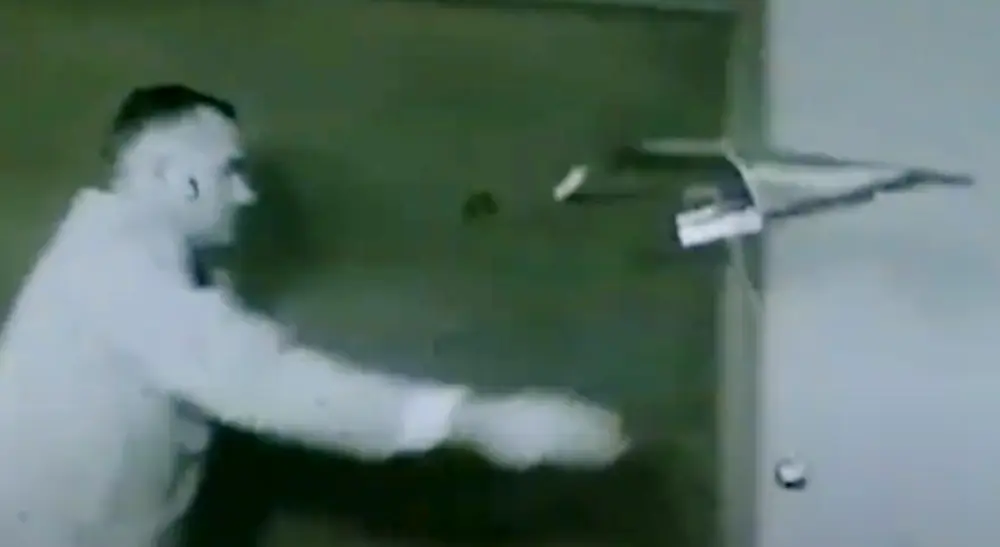
“In 1960, the first Director of the Marshall Space Flight Center, Wernher von Braun, visited Langley to discuss the potential of the flexible wing as a means of returning spent rocket boosters to dry land. Rogallo gave von Braun a demonstration of a flexible wing model, the same model he demonstrated for me in his living room more than 30 years later.”
To illustrate the topic, Rogallo’s demonstration to von Braun is recreated and filmed at different times in Rogallo’s life. The models are similar. They are not Rogallo’s patented kites or Flexikites. They are bi-conical, with rigid keel and leading edges. (ana-01)
We only have Rogallo’s word that Werner von Braun was involved. There are no references to his involvement in the publications that we consulted.From Rogallo’s December 19, 1958, meeting with the Langley Committee on General Aerodynamics, we have only “hurriedly prepared charts” (in Rogallo’s words) showing that everything is possible. (rre-02) (By 1962, Rogallo will be claiming that everything is a Rogallo Wing.)
If NACA had worked on the concept, as Rogallo claimed, Rogallo must have shown NACA’s work, not only his own. The designs shown in the “hurriedly prepared charts” certainly have little in common with Rogallo’s flexible kite designs.
Rogallo was not alone when he met the Langley Committee and the Space Task Group. He was with “his co-workers” or with “his colleagues”. The credit for moving the project forward has to be shared with Langley’s other engineers.
The Space Task Group was “less than enthusiastic”. The project was approved only because engineers from another NASA site (Marshall Space Center) and another company (McDowell) had started to research the paraglider.
What became the Paraglider Development Program was a complex project involving many research groups from both the government and private sector. Giving credit for it solely to Rogallo is unmerited.
According to Wilbur E. “Bill” Green
Wilbur E. “Bill” Green, the founder of a company still in business in Texas, USA, claimed to have played a part in NASA’s decision. In 1953, he filed a patent, US 2,785,870 (pin-13) that covered many designs, including a tailless bi-conical delta wing. His company, Gayla Kites, sold its patented kites in the hundreds of thousands. Green sent some of his kites to the US Air Force. He claimed that was why NASA started its research on paragliders.
It makes sense. Green’s Kite is delta-shaped with a rigid keel, leading edges, and crossbar, just like the models tested by NASA, the Department of Defense, and their contractors. They are an evolution of the many patented bi-conical wings from earlier in history. For more information, see the Patents of Interest sub-chapter.